

Across cultures humans had all sorts of beliefs about the divine. But when we look at some of these myths, we often find that these divinities or gods were far from perfect pure creatures. Far from what we nowadays think of as a GOD.
So I decided to take a look at both early mythologies and modern religion to find out more about why people came up with such strange stories while trying to explain the world around them.
The divine spectrum
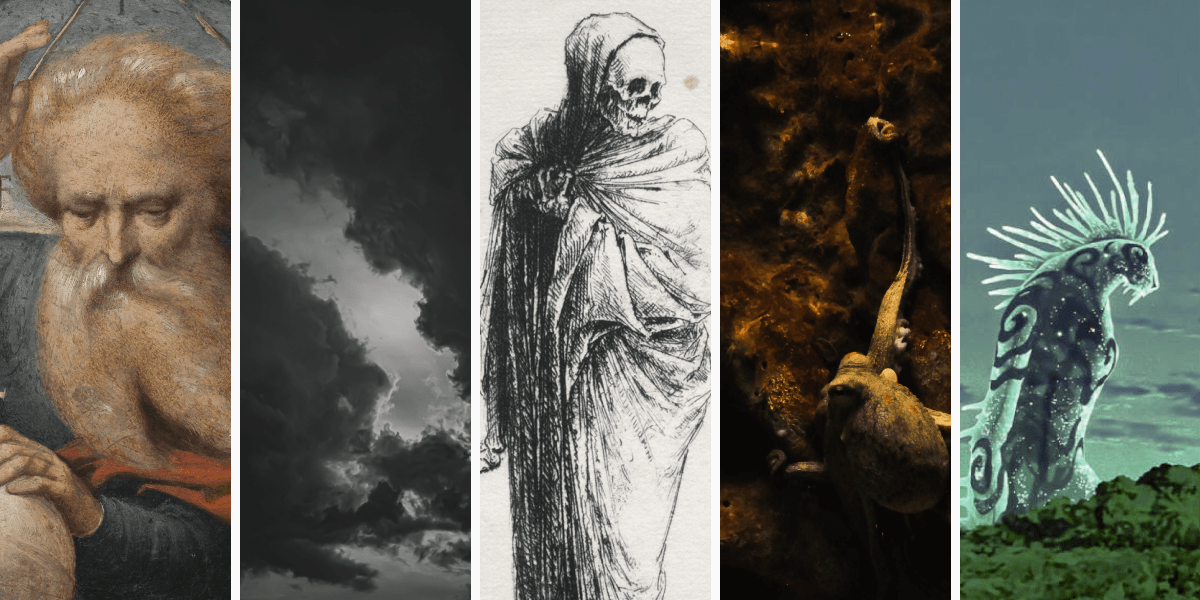
When we think of ‘God’ today, we usually picture a perfect, all-powerful creator who acts as a moral compass. But throughout fiction, mythology and ancient religions, god can mean many different things.
But since the question of “what is a god” could span an entire (much longer) essay in and of itself, I’ll hope you can be satisfied for now with a short list of some popular “types” of gods we can find.
The Omnipotent Creator – the type of god we’re most familiar with. It encompasses all depictions of a god who created the universe but contains many subtypes. (Is this god still involved with the world? Does he define our morality?)
The Force of Nature – the well-known Poseidon’s and Zeus’s of mythology. This category involves every god who holds a force of nature as part or entirety of their domain.
Concepts Personified – abstract concepts like death, justice, or balance. Anthropomorphized, they can express themselves and take action in the real world.
The Otherworldly – beings beyond human understanding; usually going hand in hand with madness and terrible catastrophes. If you’ve heard about H.P. Lovecraft and the C’thullu mythos then you already know what I’m referring to.
The Spirit – often barely considered gods, they’re the broadest and the most interesting category. They usually exist as part of nature, sometimes as protectors, other times representing places or objects taking a living form (river spirits, tree spirits and so on).
This is only a tip of the iceberg but should give you some context of how broad the belief in gods gets across different cultures and history (if you want to dive deeper into this topic OSP made a great video categorizing gods in fiction).
The flawed gods of early mythologies
Now that we have some context, let’s take a closer look at ancient mythology and why belief in gods used to look entirely different from what we see today.
Once we understand how people came up with these gods, we can see why they have those glaring faults.
Here are some of my theories for what influenced ancient myths to look the way they do.
1. Nature is temperamental
Powerful natural phenomena that inspired fear and awe were a magnet for belief. Since nature was temperamental and destructive, the gods who rule over it must be too.
2. Personification as understanding
For more abstract concepts like death, making it into a divine but anthropomorphized figure made it easier to grasp, or at least come to terms with. Giving them a tangible form made us able to interact with these concepts somewhat, but through receiving human features they also received human faults.
3. The power of drama and stories
Some Greek myths (like the ones about Zeus cheating on Hera) are like something straight from the soap opera. Which shouldn’t be surprising since myths at the end of the day are stories, and the ones that are the most engaging will be spread and adapted the most (which also gives them the biggest chance to have survived to this day).
Besides entertainment, stories also served as vessels of knowledge and cautionary tales. Passed on not because they were true. But because they were mnemonic devices, something easy to share and remember in times when you couldn’t just print a book and share knowledge that way.
4. Politics and war
There were many scenarios where religion was used for political goals. The same goes for myths. Whether it’s claiming a divine lineage, creating divine-inspired rules to follow, or rewriting and vilifying deities when taking over competing religions.
Before science managed to explain most of the stuff happening around us, the world was full of mystery. Since we’re curious intelligent creatures, we came up with our own explanations for what we saw, and by sharing those theories through storytelling they’ve gotten richer and more complex. But everything changed once we slowly started to understand more about the world we live in.
What changed from the past
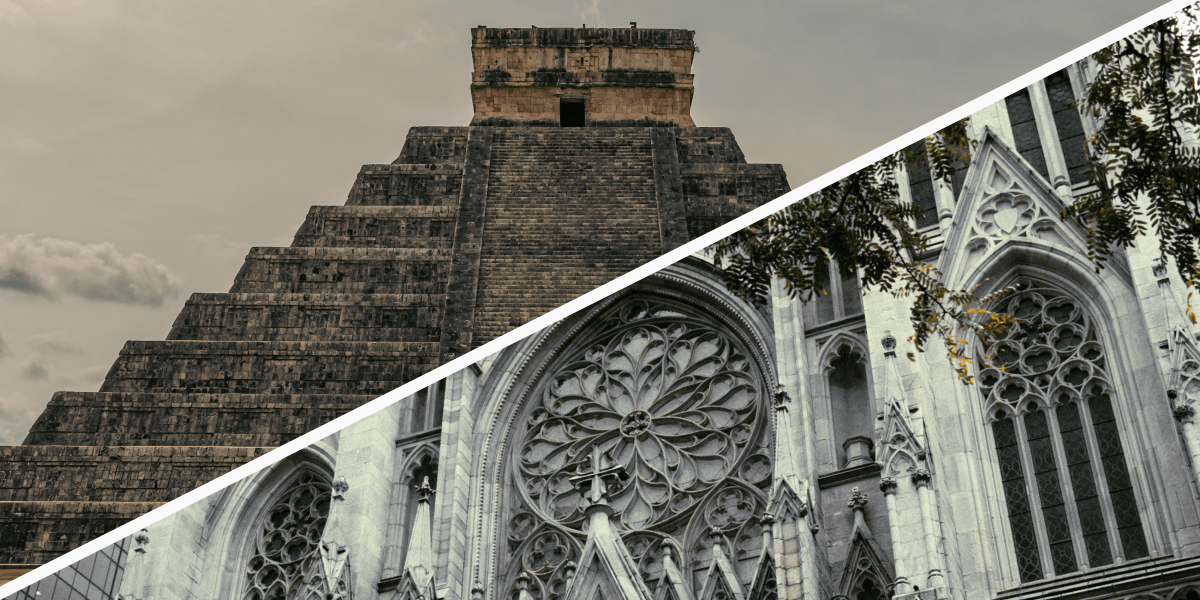
Science disenchanted the world. Once we understood what causes lightning, tsunamis and earthquakes, there was no need for gods to explain those phenomena. The same goes for sickness, the sun and stars, as well as other mysteries of the world.
Our growing understanding of the world caused religious discourse to focus around the topics of morality, life and death, and the creation of the world – in other words, the areas that still have some mystery left.
This, I believe, is the reason why two of the most popular religions in the world each worship a single, perfect, omnipotent creator.
But interestingly enough this created a new point of discourse that wasn’t a problem for ancient gods.
That is the problem of evil (if God is omnipotent, omnibenevolent, and omniscient then why does evil and suffering exist?).
But I’ll leave that popular point of debate for future philosophical discussions.
Thanks for reading,
Luke from Unwritten Tomes